

IVR Call Marketing: Use Cases for Indian Businesses
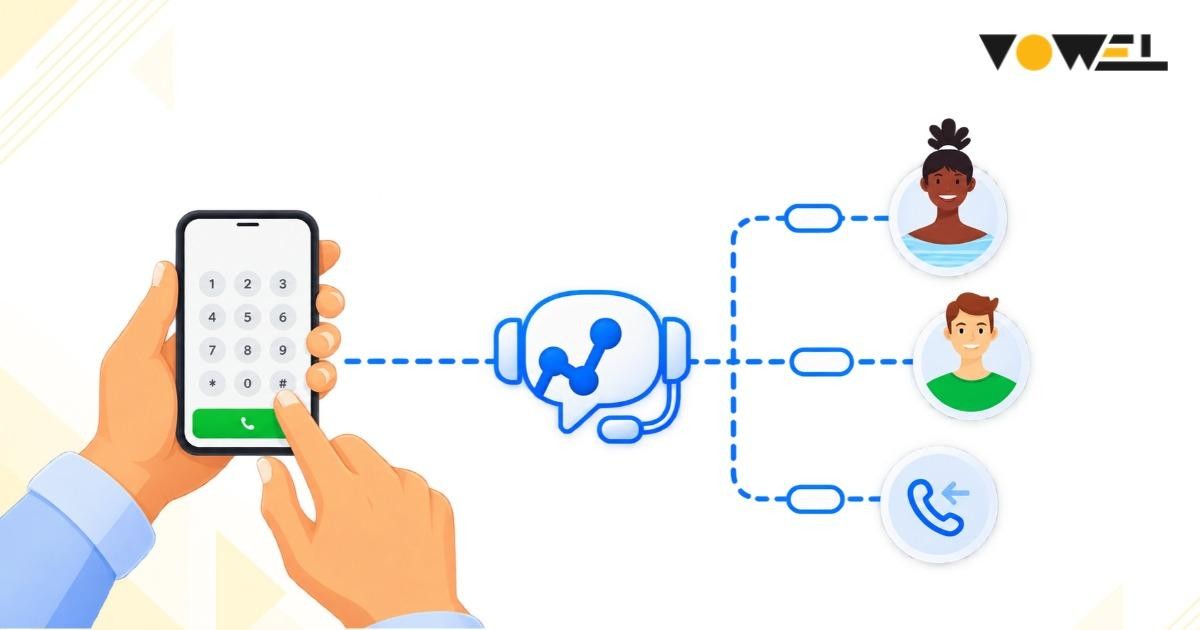
Say IVR to anyone and they'll groan about their bank. Press 1, then 3, then 9, and still no human on the line. Haan, that's the IVR most of us know. But that's customer care. IVR call marketing for business in India is another animal, and for a small or mid size company it's actually pretty handy.
Picture your sales boy with a list of 500 numbers. By lunch he's tired, by evening he's done maybe 150 calls and half of them didn't pick. Now let a system make those calls, play a 20 second message and ask people to press a key if they care. Whoever presses 1 is a warm lead. Your team only talks to them. That's the whole idea, and once you see it working it's hard to go back.
Below we've put down where this works well, where it doesn't, how much it roughly costs, and the TRAI side of things which nobody likes reading but everyone needs to.
So What Exactly is IVR Call Marketing?
Full form is Interactive Voice Response, but nobody calls it that. For marketing, it's mostly a call going out to the customer, a recorded voice talking, and the customer answering with the keypad. 1 se callback, 2 se offer dobara, 3 se no more calls. Simple stuff.
Then there's the other direction. Customer gives you a missed call or dials in, the IVR answers, asks what they're after, and either plays the info or passes them to whoever handles it. Lots of businesses keep both running side by side.
The main difference from a normal voice broadcast is the reply. In a broadcast the customer just listens. With IVR they can tell you something back, and that "something" is where the value is.
Where IVR Marketing Actually Works in India
Not every business needs this. But for some it fits really well, like these:
- Real estate: new tower going up in Noida Extension, and the builder has 3,000 old enquiry numbers lying in Excel. IVR call goes out, the ones pressing 1 get a call from the site team, nobody else is chased.
- Education and coaching: admission season is chaos. An IVR call asking "press 1 if you want details about the new batch" filters serious parents from the ones who were just checking.
- Healthcare: health camp invites, new specialist joining, follow ups after a check up. Patients press a key to book, the clinic gets a list next morning.
- Retail and local shops: festive sale announcements in Hindi, with a press 1 to get the store location on SMS. Works better than you'd think, especially in smaller towns.
- BFSI and loan agents: pre-approved offers, policy renewal reminders, EMI follow ups. Here the compliance side matters even more, more on that below.
- Political and social campaigns: surveys and feedback during events, where people press numbers to give a quick opinion.
Missed Call Campaigns: The Inbound Trick
This one deserves its own small section because it's so common in India. You put a number on a hoarding, a newspaper ad or even a pamphlet and say "give a missed call on this number". The call disconnects on its own, costs the customer nothing, and your system records their number.
After that, an IVR call goes back to them automatically, plays the offer, and asks them to press 1 if they want a person to call. So someone who saw your banner at a traffic signal becomes a lead in your list within minutes, without filling any form. For people who don't like typing on a phone, which is still a lot of people, this is just easier.
Why Businesses Prefer IVR Over Plain Cold Calling
Cold calling with a team is slow and expensive, nobody will argue with that. Salaries, phone bills, training, and then half the calls go to people who were never interested in the first place. With IVR the first round of filtering is done by the system.
Second thing is scale. A team of five can maybe make a few hundred calls a day if they're really pushing. An IVR campaign can reach a few thousand people in the same time, and only the ones who pressed a key come to your team.
Third, language. Record it in Hindi, English, Punjabi, whatever, and match it to the list. A cold caller who only speaks English is not going to get far in a Kanpur market.
And the fourth one, which people don't talk about much, is data. Every key press is recorded. So at the end of the day you know how many picked up, how many pressed 1, how many asked to stop, and at what time people were most responsive. That kind of report from a manual calling team is mostly guesswork.
How to Set Up an IVR Marketing Campaign
You don't need a tech team for this, but a bit of planning helps a lot.
- One campaign, one goal. New project leads? Camp bookings? Event feedback? Choose one. Stuff all three in a single call and people get confused and cut it.
- Clean your list. Old numbers, duplicates, people who already said no last time. Remove them before you start, it saves money and complaints.
- Write a short script. Who is calling, what's the offer, what to press. Twenty five to thirty seconds is enough. If they have to wait a minute to hear "press 1", most won't.
- Keep the menu small. Two or three options at the most. Nobody remembers option 6.
- Always give an opt out. A "press 9 to not receive such calls" option is good practice and keeps complaints down.
- Think about what happens after someone presses 1. Live transfer to a person, or a list your team calls back tomorrow? If you transfer live, make sure someone is actually sitting there to pick up.
- Test it on your own staff. Ten numbers across Jio, Airtel and Vi, listen to it, press every key, check the report.
- Launch small, then scale. Start with a few hundred numbers, see what the response looks like, fix the script, and then go big.
TRAI Rules for IVR Marketing Calls
This is the part you can't skip. Promotional calls in India have to come from the 140 number series, and they are checked against the customer's DND preference before they go through. Service and transactional calls from banks, financial services, insurance companies and government bodies go through the 1600 series. You can read the TRAI press release for the latest numbers on how much of this traffic is being filtered.
TRAI has also tightened things for automated calls. As per a September 2026 PTI report, calls made by software, auto diallers or pre recorded systems are treated as application to person calls, and they have to be declared to the telecom operator in advance along with the numbers being used. Calls that are not declared get treated as spam.
In practice this means your business needs DLT registration as a Principal Entity, approved voice templates, and a provider who sends the calls on the right route. Trying to run IVR marketing from ordinary ten digit mobile numbers is the quickest way to get those numbers blocked.
What Does IVR Call Marketing Cost?
Most providers in India charge per call or per pulse, where a pulse is usually 15 or 30 seconds. On top of that some charge for the IVR setup, the number, live call transfer minutes and reports. The final cost depends on your volume, the length of your message and how many options your menu has.
The better way to look at it is cost per lead. If your sales team was spending a full day calling people to find five interested buyers, and an IVR campaign gives you those five people in an hour, the maths usually works out in favour of IVR pretty quickly.
Mistakes People Make With IVR Campaigns
- A menu as long as a wedding card. By option 5 people have forgotten option 1 and hung up.
- Long, boring intro. If the first ten seconds are just your company history, the call is already lost.
- No one to take the transferred call. Customer presses 1, waits, and hears ringing that nobody picks up. That's worse than not calling at all.
- Same list again and again. Calling the same people every week with the same offer only gets you complaints and DND registrations.
- Not reading the report. Your key presses are coming 7 to 8 pm, and the campaign still runs at 11 am. Kyun?
Last Word
Look, IVR won't save a bad offer, nothing will. But got a decent product and a list of maybe-interested people? Then it's about the cheapest way to find the serious ones before your team burns a day on calls. Short call, small menu, TRAI rules followed, and let the numbers guide the next round.
FAQs
What is IVR call marketing?
Automated calls where the customer answers back with the keypad, for a callback, more info, or to say stop calling me.
Is IVR marketing legal in India?
Yes, as long as you follow TRAI rules. Promotional calls must come from the 140 series, you need DLT registration and approved templates, and automated calls have to be declared to the telecom operator.
IVR vs voice broadcasting, what's the difference?
Broadcast is one way, the customer only hears it. IVR adds a key press so you actually learn who's interested.
What does IVR call marketing cost in India?
Usually per call or per 15/30 second pulse, sometimes plus setup, number rent and transfer minutes. Volume and message length decide the rest.
What is a missed call campaign?
You share a number and ask people to give a missed call. The number lands in your list, and a call or SMS goes back with the offer. Customer pays zero.
Can the IVR talk in Hindi or a regional language?
Yes. Sure. Hindi, English, Punjabi, anything, and you can even do 'Hindi ke liye 1 dabayein' at the start.
Which businesses get the most out of it?
Mostly the ones sitting on big lists: real estate, coaching and schools, clinics, retail, BFSI, events. They need to sort serious enquiries fast.
Can the call go to a real person?
Yes. Yes, the key press can patch them straight to your sales person. Just make sure that person is actually free.
How do I know the campaign is working?
Pickups, key presses, leads, opt outs, best time slot. Those five numbers tell you most of it. Compare cost per lead with your normal calling team.